Las Vegas Day Tours
I’m Serious Day Tour Man AI, your day trip expert. Ask me anything — where to go, how to get there, and what’s actually worth your day.
Las Vegas sits in the middle of the Mojave’s greatest hits, and the first rule catches most visitors: from October through May, you cannot drive Red Rock Canyon’s scenic loop between 8 and 5 without a timed reservation — seventeen miles from the Strip, booked on a federal website, printed before you leave cell service. The mechanics lead the list.
The bigger question — the Grand Canyon — gets the geometry the brochures blur: the Skywalk is not the national park, and the two rims are different trips entirely. Add the dam that Niagara-sized its spillways, a state park that looks like Mars rehearsing, and Utah’s best canyon at the radius’s edge. The city block covers resort fees, show tickets, and the buffet math.
Here’s what’s worth a day, with real times and honest trade-offs.

Popular Day Trips
Hoover Dam
The Tour Worth Booking, the Bridge View That’s Free
Valley of Fire
The Winter Rule, the Fire Wave
Death Valley
The Season That Matters, the Lowest Point
Zion
The Six A.M. Departure, Utah’s Clock
Red Rock Canyon — The Timed Loop
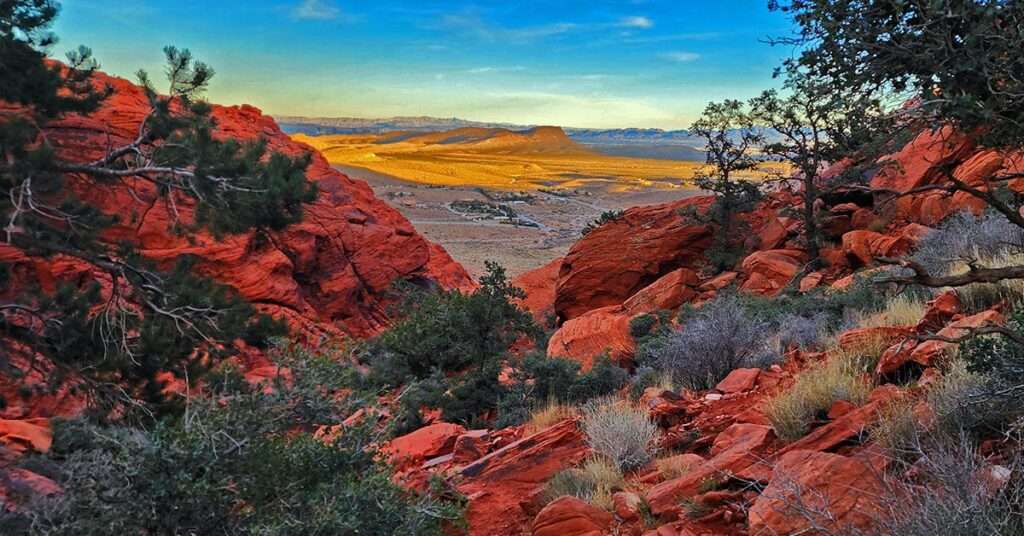
Seventeen miles west — close enough that the sandstone escarpment photobombs the Strip’s sunset — Red Rock Canyon National Conservation Area runs the desert’s most accessible grandeur: the 13-mile one-way scenic drive under 3,000-foot red-and-cream walls, with Calico’s slickrock scrambles, Joshua tree stands, and bighorn sightings as the supporting cast.
The mechanics, exactly: from October 1 through May 31, timed-entry reservations are required for the scenic drive between 8 a.m. and 5 p.m. — booked on recreation.gov (the per-vehicle fee rides on top; America the Beautiful passes cover the fee but still need the slot), with a 30-minute early-arrival allowance and one crucial habit: save the ticket offline, because cell service dies before the entrance station. The workarounds are real: arrive before 8 a.m. (no reservation needed, and the sunrise light is the best hour anyway), come June–September when reservations aren’t required (and the heat makes dawn the right start anyway), or take the e-bike tours that bypass the vehicle rules entirely.
The circuit: the visitor center’s desert-tortoise briefing, the Calico overlooks’ ten-minute scrambles, Ice Box Canyon or Lost Creek for the shaded-slot version, and the High Point overlook for the full sweep. Two hours covers the drive, four with a hike, and note that Red Rock and Valley of Fire sit ninety minutes apart in opposite directions; pick one per day.
Hoover Dam & Lake Mead — The Concrete Colossus
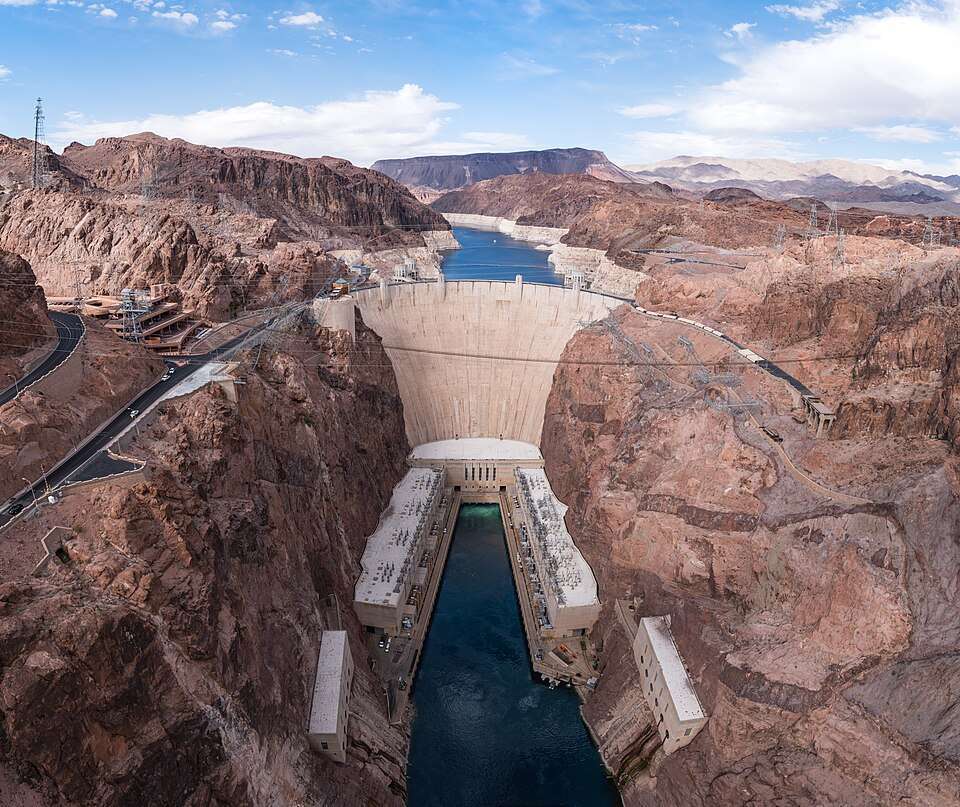
Forty-five minutes southeast, Hoover Dam remains the country’s most impressive Depression-era sentence: 6.6 million tons of concrete plugging Black Canyon, built ahead of schedule in brutal heat, and still powering three states. The Bureau of Reclamation runs the official tours from the visitor center — the Power Plant tour covers the generator hall and penstock tunnels, while the fuller Dam Tour adds the passageways deep in the concrete and books out ahead in season; buy on the official usbr.gov channel, and note the security rules and bag limits before driving out.
The free option is strong: walking the crest between Nevada and Arizona, the Winged Figures and the intake towers, and the Mike O’Callaghan–Pat Tillman Memorial Bridge’s pedestrian walkway — the downstream overlook that puts the whole dam in one frame, vertigo included. Lake Mead behind it tells the West’s water story in bathtub rings; the marina drives and Boulder Beach add the shoreline hour.
Nearby, Boulder City — the government-built town that houses the dam’s story and, by design, no casinos — handles lunch with its 1930s main street, and the Nevada State Railroad Museum’s excursion trains run weekends. Dam-plus-Boulder City is the half day; adding the bridge walk and a Lake Mead overlook rounds it — and summer visitors do the outdoor parts before 11 or after 4, because the canyon is a convection oven.
Read the full Hoover Dam day-trip page.
Valley of Fire — Mars, One Hour North
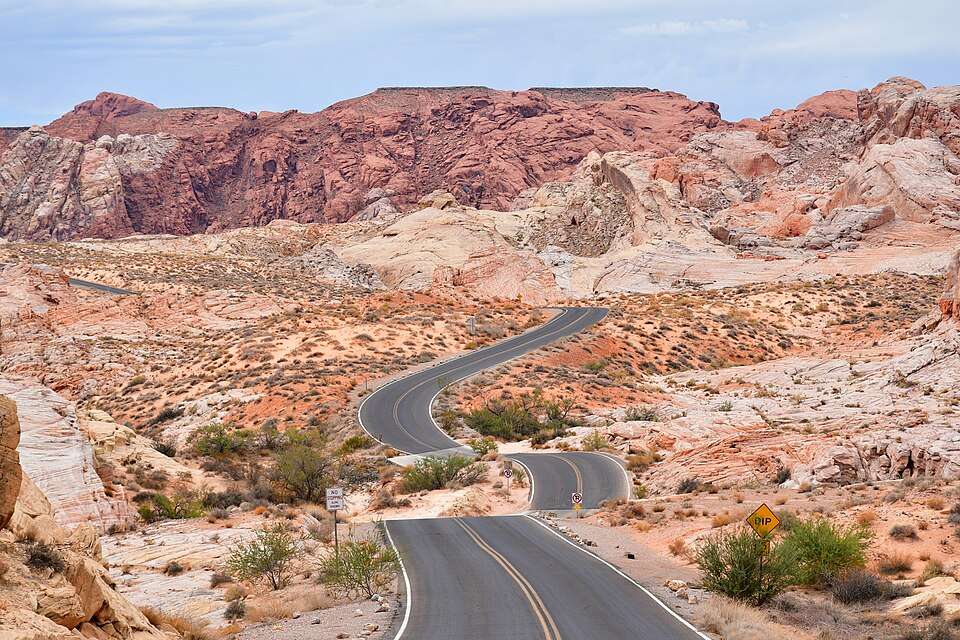
An hour northeast, Valley of Fire State Park is the Mojave showing off: Aztec sandstone in reds that ignite at the day’s ends, petrified dunes, 2,000-year-old petroglyph panels, and the banded Fire Wave — the striped bowl that launched ten thousand posts — at the end of a mercifully short trail.
The circuit: the visitor center first (the road layout makes it the natural hub), Atlatl Rock’s ladder-served petroglyphs, the Beehives and Elephant Rock formations by short walks, Rainbow Vista’s pastel overlook, and the White Domes loop’s slot-canyon finale down the park’s best road — Mouse’s Tank Road, the drive that features in every car commercial filmed in Nevada. The Fire Wave and Seven Wonders loop takes the photographic crown in the golden hours.
Three rules apply: summer is serious — the park regularly posts extreme-heat warnings and trail restrictions in the hottest months, and the sane season runs October through April — water travels in gallons not bottles, and the petroglyphs are looked at, never touched or climbed. Entrance runs per vehicle at the gate. The frame: this is the day-trip sweet spot — closer than the Grand Canyon, wilder than Red Rock’s loop, and a morning-and-golden-hour park with a midday lunch gap best spent at Overton’s little museum or back at the pool.
Read the full Valley of Fire day-trip page.
The Grand Canyon Question — Two Rims, Honestly
The brochures blur what geography separates, so here it is plainly. Grand Canyon West — the Skywalk — sits two and a half hours away on the Hualapai Nation’s land: it is not the national park, the famous horseshoe glass bridge charges its own stacked fees (photography rules included), and the canyon there, while part of the same canyon, runs narrower and shallower than the park views. As the closest real-canyon day from Vegas, it works — bus tours make it effortless — and travelers should buy it knowing exactly what it is: the convenient rim, not the iconic one.
The South Rim — the national park, the postcard, Mather Point and the full mile-deep spectacle — sits four and a half hours away, which makes the day trip a ten-to-eleven-hour commitment with roughly three hours at the rim. It runs daily by coach and small group, it satisfies determined first-timers, and the arithmetic still favors an overnight in Tusayan or Williams (the Grand Canyon Railway’s train from Williams is the charming way in) for anyone who can spare it: the canyon is at its best at dawn and dusk, exactly the hours the day trip spends on I-40.
The helicopter honesty: the air tours from Vegas deliver the West Rim (some with canyon-floor landings on Hualapai land) in a half day at a premium — spectacular, brief, and weather-dependent. The verdict set: West Rim for time-poor convenience, South Rim overnight for the real thing, South Rim day trip only with eyes open, and no version of “Grand Canyon plus Hoover Dam plus Vegas by dinner” that isn’t mostly bus.
Zion — The Long Day Worth Its Miles
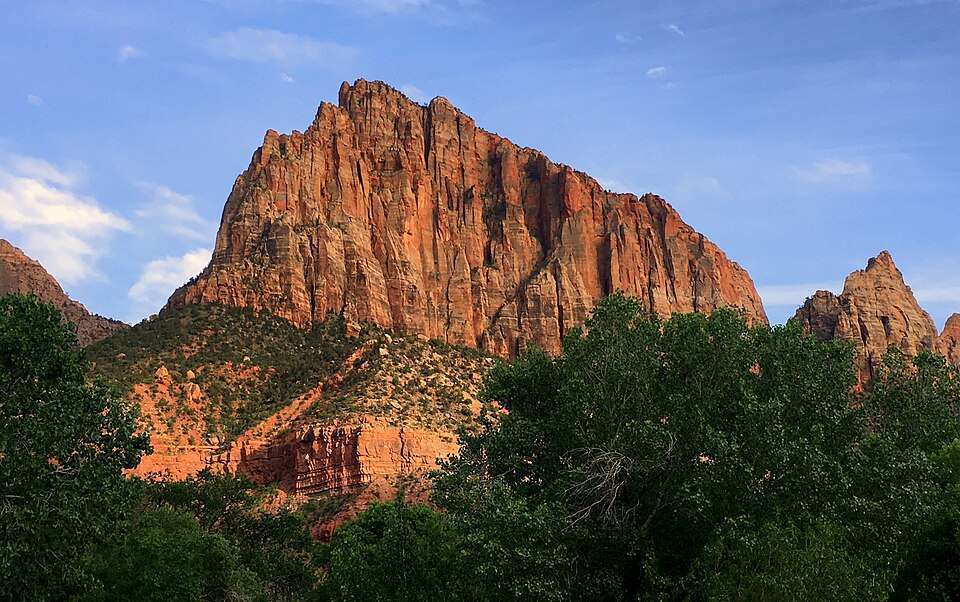
Two and a half hours northeast, Zion National Park is the radius’s masterpiece and a real stretch: Utah’s red-walled canyon runs on a seasonal shuttle system (private cars are barred from the scenic drive most of the year — park in Springdale or the visitor center and ride), and the famous walks sort by commitment: the Riverside Walk’s paved mile toward the Narrows’ wading entrance, Emerald Pools’ family loops, and Canyon Overlook’s short scramble to the postcard frame from the east side’s switchbacks.
The permit honesty: Angels Landing — the chained ridge everyone has seen — requires a permit won by lottery, applied for in advance seasonal windows or the day-before drawing; no permit, no chains, no exceptions, and the rangers check. The Narrows’ bottom-up wade needs no permit but does need water-level judgment and, in cold months, rented gear from the Springdale outfitters.
The day-trip math: leave by 6, arrive as the shuttle queues build, pick two walks plus the east-side drive through the tunnel (the checkerboard mesas justify the exit), and accept the 9-to-10-hour round. An overnight in Springdale converts the trip; dawn in the canyon before the shuttles fill is what the photographs promise — and pairs with a Bryce Canyon addition for the committed. Winter runs the canyon uncrowded and open to private cars; summer runs the heat and the flash-flood forecasts, both checked before wading anything.
Read the full Zion day-trip page.
The Resort-Fee Truth, the Ticket Sort & Vegas Itself
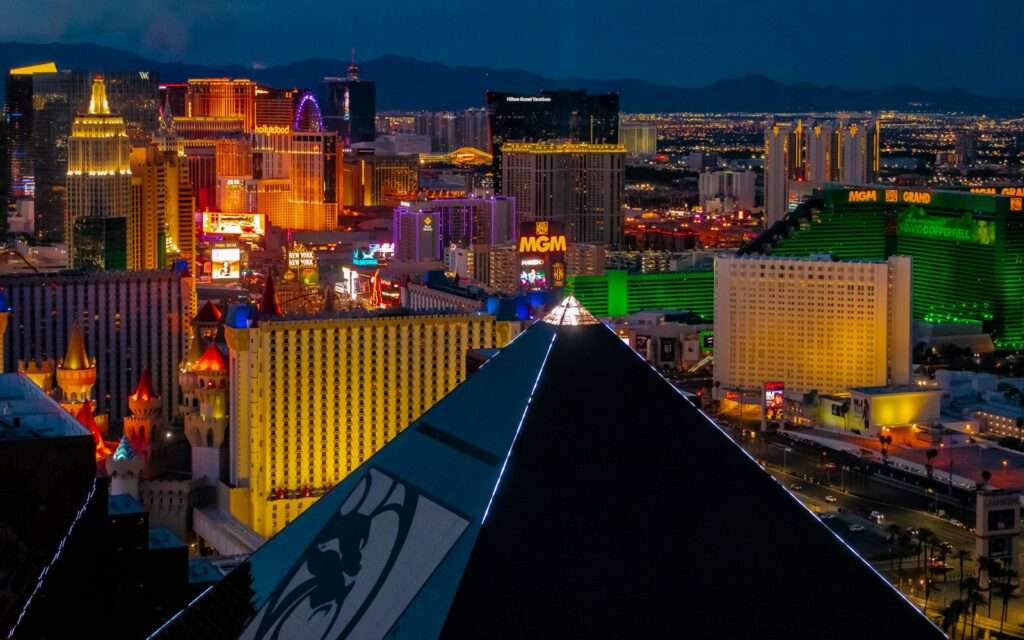
The pricing honesty first, because it shapes every budget: the advertised room rate is not the price — resort fees (charged nightly, covering “amenities” you didn’t ask about) add substantially at nearly every Strip property, parking fees rose from historic free to routine, so compare total cost, not sticker. The drink-while-you-play economy and the players-card sign-up are the small offsets everyone uses.
The ticket sort: same-day discount booths and the shows’ own apps move unsold seats at real cuts; the headliner residencies price like the market events they are, booked ahead; and the free spectacle circuit remains excellent — the Bellagio fountains (shows every 30 minutes afternoons, every 15 evenings), the Fountains’ choreography changing by playlist, Fremont Street’s canopy shows downtown, and the Bellagio conservatory’s seasonal rebuilds. Downtown itself — Fremont’s vintage-neon casino row and the Container Park — is the older, looser, cheaper Vegas an Uber away, worth its evening.
The living rules: the Strip is 4.2 miles long and the map lies about walkability (the monorail, the free trams between sister properties, and rideshare pickups at designated doors cover the gaps); the buffet era has consolidated into fewer, better, pricier flagships — go at brunch-into-lunch crossover for the value window — and the food-hall-and-celebrity-chef economy has replaced the $4.99 prime rib with genuinely great eating at every price above it. Hydration is a safety rule, not a suggestion: the desert runs 110-plus in summer, the casinos hide the clock and the weather, and the water bottle is equipment. Season math: October–April is the golden window (and Red Rock’s reservation season — book the loop); June–August is for pools, dawn hikes, and air conditioning; and the convention calendar doubles room rates on random weekdays — check the citywide calendar before assuming any date is cheap.
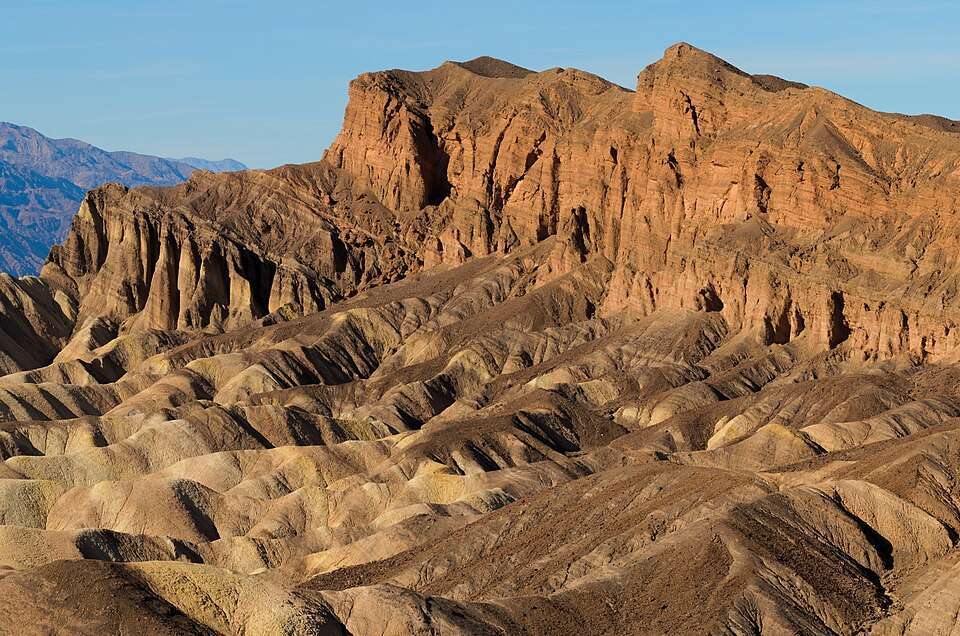
Full day-trip pages: Death Valley.
Frequently Asked Questions
Do you need a reservation for Red Rock Canyon?
From October 1 through May 31, yes — timed entry for the scenic drive between 8 and 5, booked on recreation.gov, with the fee separate and the ticket saved offline (cell service dies at the gate). Before 8 a.m. or in summer, no reservation; the e-bike tours bypass the system year-round.
Is the Skywalk the real Grand Canyon?
It is the Grand Canyon, but not the national park — Grand Canyon West sits on Hualapai land 2.5 hours out, with its own stacked fees and a narrower canyon than the South Rim’s mile-deep postcard, 4.5 hours away. West for convenience, South for the icon — ideally with an overnight.
How do Hoover Dam tours work?
Book the Bureau of Reclamation’s official tours — Power Plant regularly, the fuller Dam Tour ahead of time — and add the free crest walk plus the Memorial Bridge’s downstream overlook. Boulder City handles lunch; summer outdoor time runs before 11 or after 4.
Can you do Zion in a day from Vegas?
Yes, as a committed 9-to-10-hour round: shuttle-season rules bar private cars from the canyon drive, Angels Landing needs a lottery permit, and two walks plus the east-side tunnel drive is the realistic menu. The Springdale overnight — dawn before the shuttles — is the upgrade.
What are resort fees?
Mandatory nightly charges most Strip hotels add on top of the advertised rate, covering amenities regardless of use — compare total price, not sticker, and budget for parking too. The free-spectacle circuit (fountains, conservatory, Fremont’s canopy) is the counterweight.