Valley of Fire from Las Vegas: The Winter Rule, the Fire Wave, and Heat That Isn’t Kidding
An hour from the Strip, Nevada’s oldest state park burns red in sandstone — and takes summer seriously enough to close its marquee trails when the heat turns lethal. Winter is the season; that’s the page.
The short version
- The drive runs I-15 north to the Valley of Fire exit — about an hour from the Strip to the west entrance, with the park road itself among Nevada’s best scenic miles.
- Entry runs about $15 per out-of-state vehicle at the fee stations; Nevada’s oldest state park (1935) posts hours, closures, and heat rules at parks.nv.gov.
- The summer closure is the page’s headline fact: extreme-heat protocols shut the exposed marquee trails — Fire Wave, White Domes, and companions — from roughly mid-May through the end of September, a policy written after visitor deaths; the alarm’s check-before-driving rule governs.
- In season, the Fire Wave is the marquee: a 1.5-mile round trip to sandstone striped like a frozen tide — mid-afternoon light saturates the bands, morning keeps the temperature workable.
- White Domes’ slot-canyon loop, Rainbow Vista’s pastel overlook, Elephant Rock by the east entrance, and the Seven Sisters’ picnic formations string along the park road at pull-off intervals.
- Atlatl Rock’s stairway climbs to petroglyph panels a thousand-plus years old — the human layer, protected by distance and the assumption of your decency.

Getting there
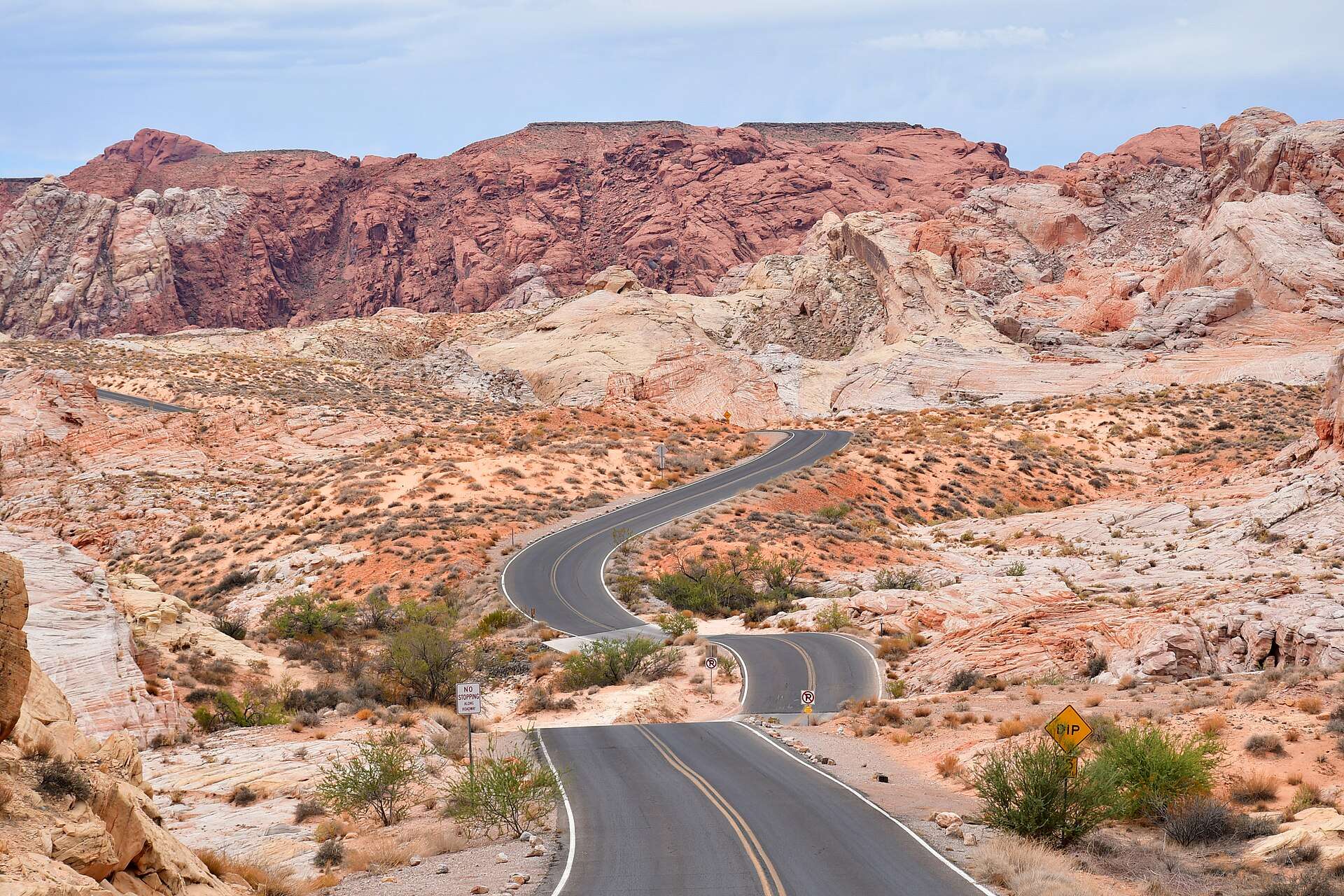
I-15 north sheds the city fast; the Valley of Fire Highway’s last miles into the west entrance make the transition from desert-tan to fire-red with theatrical timing. There’s no transit, no services past the visitor center, and no cell coverage worth trusting — the alarm’s water clause and a full tank are the entry requirements the fee station doesn’t check. The east-exit continuation toward Lake Mead’s Northshore Road turns the return into a loop for drivers with afternoon left.
The day
In-season structure: enter at opening, drive the park road’s white-gold morning light to the Fire Wave trailhead, and walk the 1.5 miles while the sand is cool enough to mean it — the striped bowl at the end is the Southwest’s best short-trail payoff. White Domes’ loop (slot canyon included) follows while legs are willing, then the drive-and-pull-off sequence: Rainbow Vista, Fire Canyon overlook, the Cabins’ CCC stonework, Atlatl Rock’s petroglyph stairs, Elephant Rock’s roadside profile. The visitor center’s exhibits and bighorn-spotting advice fill the midday retreat. Summer-closure months invert everything: the park stays open for the scenic drive and pull-offs — genuinely worthwhile in dawn hours — but the trails are shut, and this page plans accordingly rather than pretending. Every version ends by respecting the return hour the alarm set.
When to go
October through April is the whole answer — 60s-to-70s trail weather, angled light, and the full trail system open. March adds possible wildflower margins; December–January mornings run crisp and empty. May-through-September is the closure protocols and triple-digit arithmetic: the drive-through version exists at dawn, and the trails wait for fall. Whatever the month, afternoon light makes the photographs and morning makes the walking — the split-visit or the campground overnight serves photographers chasing both.
Frequently Asked Questions
Is the summer closure really absolute?
The posted closures on the exposed trails are enforced and exist because people died — the park publishes the affected list and dates each season, hence the alarm’s check. The scenic drive and short roadside stops remain open; the deep-sand marquee walks do not.
Fire Wave or the famous permit-lottery waves?
Different animals: the Wave here is a free-with-entry open-air walk — no lottery, no guide requirement — striped sandstone at a fraction of the famous names’ friction. It’s smaller and it’s yours in twenty minutes of walking; that’s the trade and it’s a good one.
Can I combine it with Hoover Dam?
Geometrically yes — opposite directions from the city, so it’s a full driving day with the dam’s tour clock in charge (that page’s booking rules apply). The workable pairing is Valley of Fire morning, dam afternoon, in the cool months only.
What wildlife should I watch for?
Desert bighorn work the rocks year-round and tolerate distance photography; everything else — including the reptiles the heat favors — prefers dawn, dusk, and being left alone. The bighorn near the visitor center water sources are the reliable sighting.
Is the drive-through version worth it in summer?
At dawn, genuinely yes — the park road’s colors and pull-offs deliver a real hour before the heat takes over, closures notwithstanding. As a midday stop it’s an oven with a view; the alarm’s arithmetic doesn’t bend for optimism.