Death Valley from Las Vegas: The Season That Matters, the Lowest Point, and Heat Taken Seriously
Two hours west, the hottest place on earth runs its season in reverse: October through April is when this park welcomes you. Summer is not weather here — it’s a hazard, and the page says so plainly.
The short version
- The park sits about two hours from Las Vegas via Pahrump and Death Valley Junction — a full tank leaving town, water beyond your plans, and a downloaded map per the no-cell-service warning; conditions, alerts, and the ~$30 vehicle pass at nps.gov/deva.
- The season rule is the page: October through April runs the park at walkable temperatures; summer runs the valley floor past 115°F routinely, and the alarm’s hazard framing is the National Park Service’s own — dawn hours, no afternoon hiking, and the car’s fuel and coolant treated as safety equipment.
- Badwater Basin is the continent’s floor at 282 feet below sea level — the salt-polygon walk from the boardwalk, the sea-level sign high on the cliff behind, and the flats’ white glare in every direction.
- Furnace Creek up the road holds the record the alarm cited: 134°F in July 1913, the highest air temperature ever reliably recorded on earth — the visitor center’s thermometer is the summer selfie of poor judgment.
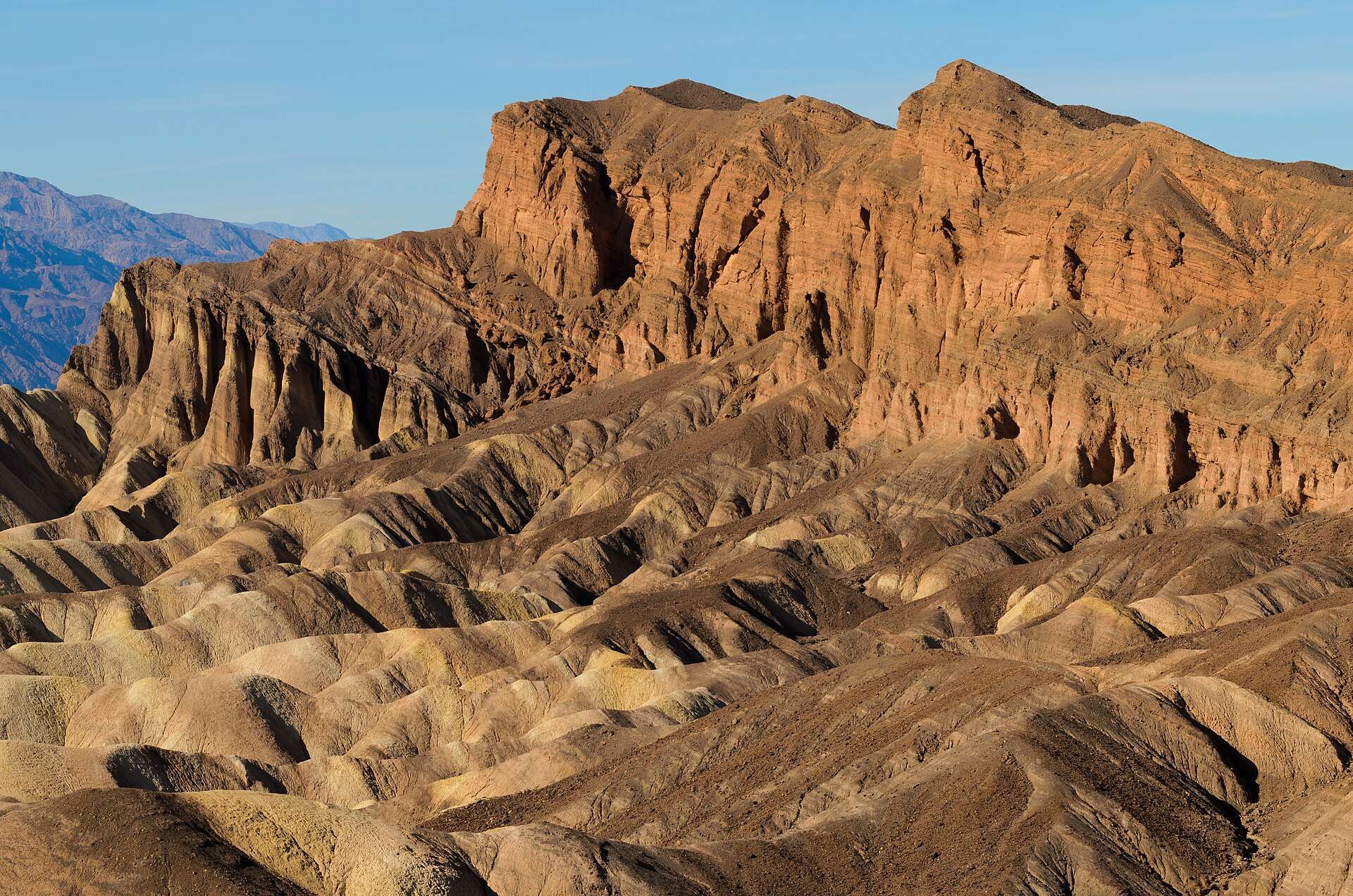
- The classic circuit stacks close together: Zabriskie Point’s golden badlands at sunrise, the Artists Drive loop’s paint-splash hills (Artists Palette mid-loop), Golden Canyon’s short walk in season, and the Mesquite Flat dunes toward Stovepipe Wells.
- Dante’s View climbs to 5,475 feet above Badwater — the whole valley floor mapped below, twenty degrees cooler than the basin, and the summer version’s one legitimate midday stop.

Getting there
The drive out of Las Vegas is the safety briefing: fuel topped at Pahrump, water cases in the trunk, the offline map saved, and the day’s plan told to someone — the alarm’s no-cell-service line is geography, not caution theater. Entry runs on the digital or kiosk pass; rangers at Furnace Creek answer the conditions question that outranks every itinerary. The park is enormous and the Vegas-side circuit — Dante’s, Zabriskie, Badwater, Artists Drive, the dunes — clusters efficiently; western reaches like the Racetrack are high-clearance expeditions filed under another trip entirely.
The day
Season version (October–April): Zabriskie at first light for the badlands’ gold, Dante’s View while the air is clearest, then the descent to Badwater for the salt-flat walk out and back — the polygons sharpen the farther you commit, and the turnaround discipline is yours to keep. Artists Drive northbound with the Palette stop, Golden Canyon’s hour if the legs vote, and the Mesquite dunes for the late light close the loop; Furnace Creek’s visitor center, dates, and fuel anchor the middle. Summer version, per the alarm and only if you must: dawn at Zabriskie and Badwater’s boardwalk-distance look, Dante’s View for the survivable overlook, and out of the park by late morning with the air conditioning treated kindly on the climbs — the grades cook engines, and the pullouts exist for a reason. Both versions end with the drive’s fuel-and-water margins intact, which was the plan working.
When to go
October through April, per the alarm’s full stop — with November through March as the sweet core and the wildflower lottery (rare super-blooms after wet winters) as spring’s possible bonus. Winter brings snow to the high overlooks and perfect walking to the floor. Summer visits happen — the park stays open and the hazard messaging is everywhere — under the dawn-only rules this page already set. Whatever the month, wind is the dunes’ variable and the forecast’s fine print; the park’s alert page is the morning read.
Frequently Asked Questions
Is the summer danger really that serious?
Yes — heat deaths occur in the park most summers, often fit visitors on short walks misjudging the arithmetic: air past 115°F, ground far hotter, and exertion compounding faster than thirst signals. The park’s own messaging matches the alarm’s register. October through April simply deletes the problem.
Can I do Death Valley and Red Rock or Valley of Fire together?
No — each is its own day and this network documents the others (Valley of Fire with its summer-closure rules included). Death Valley’s distances alone fill the frame; stacking desert parks stacks their risks and halves their returns.
What should actually be in the car?
A gallon of water per person beyond drinking plans, a full tank at Pahrump, coolant checked, offline maps, real sun cover, and food — the alarm’s safety-equipment framing is literal. Rental-car travelers confirm the spare exists; the tow distance is measured in hours.
Is Badwater’s walk hard?
In season it’s a flat stroll on salt crust — go as far as feels right and turn around; the polygon field’s best texture starts a half mile out. In summer it’s a boardwalk-length look, per the dawn-only rules. The below-sea-level sign photograph is free at any distance.
Where does the ‘134 degrees’ claim stand?
The 1913 Furnace Creek reading stands as the official world record for air temperature, with a scientific asterisk debate the park acknowledges — modern verified readings here still run among the highest ever measured. Either way the operational answer is the same: the alarm’s season rule.